
Dependencies
Dependencies are used to specify that the timing of a task is dependant on the timing of other tasks. Each dependency is specified between a predecessor and a successor task.
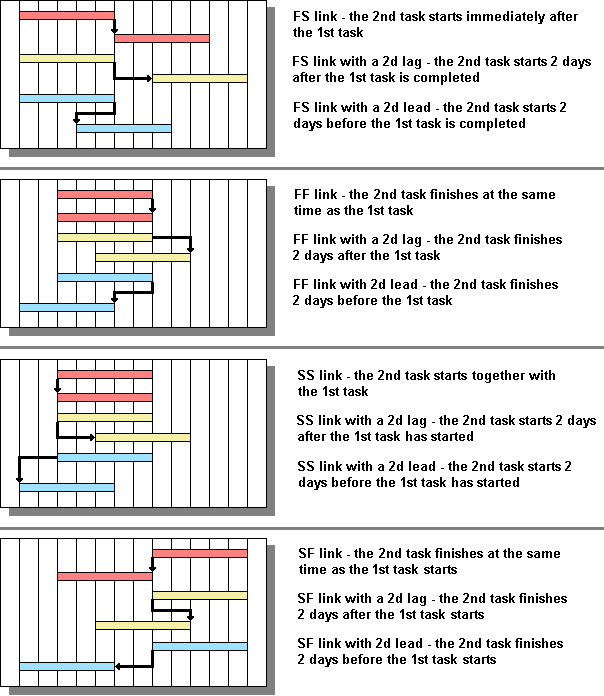
DTS support the following dependency types:
- Finish-to-Start - the successor task can start once the predecessor task has finished.
- Start-to-Start - the successor task can start once the predecessor task has started.
- Finish-to-Finish - the successor task can finish once the predecessor task has finished
- Start-to-Finish - the successor task can finish once the predecessor task has started
DTS allows you to control the way the system schedules a task with multiple predecessors:
-
Start after latest predecessor - this is the standard CPM scheduling method (a task can only start once all of its predecessor constraints are satisfied).
-
Start after earliest predecessor - a task can start as soon as the earliest of its predecessor constraints are satisfied. Using these tasks may make determination of the critical path more complex. This dependency type is more useful in production scheduling scenarios as opposed to pure project scheduling.
Dependencies can be assigned to dependency layers, which allows you to:
- apply different scenarios in the same project by activating / de-activating certain dependency layers.
- display only certain dependency layers in the Gantt chart.
Related topics and activities
